 United States
 Canada
 Europe

 Canada
 Europe



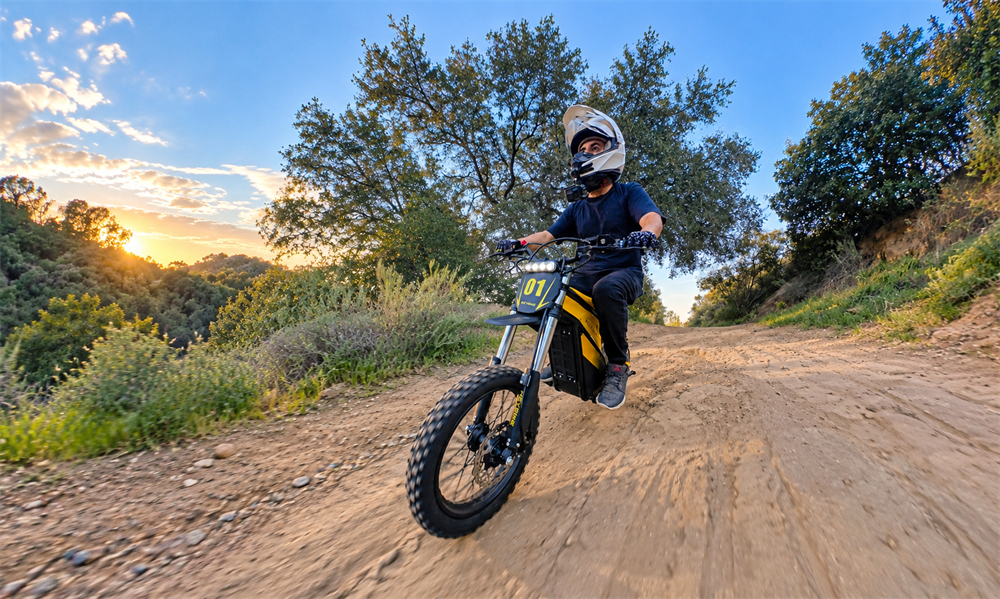
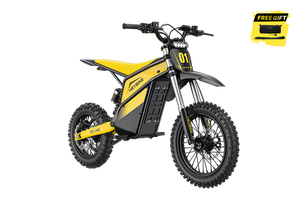
Electric dirt bike laws vary across the United States. A bike that is allowed on a designated off-road trail may still be prohibited on the public road leading to that trail.
Some states require off-highway vehicle (OHV) registration, while others use titles, decals, permits, or separate rules for public-land access.
For riders of off-road-only models such as the Heybike V1, the key distinction is simple: OHV registration is not the same as street registration.
This guide covers electric dirt bike classifications, registration requirements, and legal riding areas in seven popular U.S. states.
Quick Answer: Are Electric Dirt Bikes Street Legal?
Most electric dirt bikes manufactured primarily for off-road use are not street legal as sold.
Whether a bike can be used legally depends on three things:
- Vehicle classification: Is it an e-bike, off-highway motorcycle, OHV, or road-certified motorcycle?
- Registration: Does the state require a title, OHV registration, decal, or riding permit?
- Riding location: Is the road, trail, or recreation area open to that type of vehicle?
An OHV decal does not automatically permit street use.
Likewise, adding mirrors, a tail light, street tires, or other aftermarket equipment does not automatically make an off-road electric dirt bike eligible for road registration.
Electric Dirt Bike vs. E-Bike: Why Classification Matters
Electric dirt bikes and e-bikes both use electric motors, but they are not necessarily treated the same under U.S. law.
Under federal consumer-product rules, a low-speed electric bicycle must have fully operable pedals, an electric motor of less than 750 watts, and a motor-only speed below 20 mph under specified conditions.
State traffic laws separately determine where qualifying e-bikes may be used. See 15 U.S.C. § 2085.
A high-powered, pedal-free electric dirt bike generally falls outside ordinary e-bike classifications and may instead be regulated as an off-highway motorcycle or another type of motor vehicle.
| Vehicle Type | Typical Classification | Public-Road Access |
|---|---|---|
| Conventional e-bike | Electric bicycle | Generally permitted where its e-bike class is allowed |
| Off-road electric dirt bike | OHV or off-highway motorcycle | Limited to authorized routes and riding areas |
| Road-certified electric motorcycle | Motorcycle | Subject to motorcycle registration, licensing, insurance, and equipment rules |
Reducing a dirt bike's speed through an app does not automatically change its legal classification. Adding aftermarket pedals does not necessarily make it an e-bike either.
What Is OHV Registration?
OHV registration is a system used by states to identify and regulate qualifying off-highway vehicles.
Depending on the state, owners may receive a registration certificate, title, identification plate, decal, or permit.
It is important to separate two concepts:
OHV registration may allow a qualifying vehicle to use certain designated off-road areas, subject to the rules of the land manager.
Road registration applies to vehicles that meet the state's requirements for operation on public roads.
An OHV permit or decal should not be treated as a street license.
Not every electric dirt bike automatically qualifies for every state's OHV program. Registration eligibility can depend on vehicle documents, identification numbers, proof of ownership, and the classification accepted by the relevant state agency.
Electric Dirt Bike Laws in 7 Popular U.S. States
The following summaries focus on electric dirt bikes manufactured primarily for off-road use rather than factory-certified street motorcycles.
Local ordinances, land-management rules, seasonal closures, and vehicle-specific registration decisions may add further restrictions.
7-State Quick Guide
| State | Off-Road Requirement | Public-Road Use |
|---|---|---|
| California | OHV identification required for qualifying eMotos | OHV identification does not authorize ordinary street use |
| Texas | Off-highway motorcycles must be titled; OHV decal required at designated public OHV venues | Off-highway motorcycles are not ordinarily registered for highway use |
| Florida | OHV title required in applicable cases | An OHV title does not authorize ordinary street use |
| Arizona | OHV decal required for qualifying vehicles on public and State Trust lands | Separate on-road registration is required where the vehicle is eligible |
| Utah | OHV registration and education requirements apply; nonresidents generally need a Utah permit | Separate street-legal provisions apply only to qualifying vehicles |
| Washington | ORV title and registration rules apply to qualifying vehicles | Only eligible motorcycles that complete the state's road-use process may operate on public roads |
| New York | Qualifying off-road vehicles may be subject to ATV registration | Highway use is generally limited to routes specifically designated for ATV use |
California: OHV Registration for Electric Dirt Bikes
California formally recognizes qualifying off-highway electric motorcycles, commonly called eMotos, as off-highway motorcycles.
A qualifying eMoto is designed by the manufacturer primarily for off-highway use and has:
- An electric motor
- Handlebars
- A straddle seat
- Two wheels
- No pedals
Registration Requirements
Qualifying eMotos are subject to California's OHV identification requirements.
Owners may need proof of ownership, DMV documentation, vehicle verification, and the applicable fees before receiving the required OHV identification.
Whether a specific electric dirt bike qualifies depends on the documents and vehicle information accepted by the DMV.
Where Can You Ride?
Potential riding locations include:
- Designated OHV recreation areas
- Motorized trails open to the relevant vehicle type
- Private property with permission
California OHV identification does not authorize ordinary street riding.
For an off-road-only motorcycle, riders should plan around designated OHV areas rather than assume that road use is available.
Official source: California DMV — Off-Highway Vehicle Registration
Texas: Titles and OHV Decals
Texas separates vehicle ownership, off-road access, and highway registration.
Registration Requirements
Off-highway motorcycles in Texas are required to be titled but are not ordinarily registered as highway vehicles.
A Texas OHV decal is required when operating an OHV at designated legal venues on public land or at facilities that receive funding through the Texas Parks & Wildlife OHV program.
The decal requirement does not generally apply simply because a vehicle is used on private property with the owner's permission.
Where Can You Ride?
Texas has designated OHV areas that permit motorcycles.
Before visiting, check whether:
- The facility allows motorcycles
- A Texas OHV decal is required
- The site has its own safety or equipment rules
A Texas OHV decal does not give a two-wheeled off-road motorcycle unrestricted access to public roads.
Official sources: Texas Department of Motor Vehicles; Texas Parks & Wildlife OHV Program
Florida: Off-Highway Vehicle Titles
Florida regulates off-highway motorcycles through its off-highway vehicle titling laws.
Titling Requirements
Florida law requires a certificate of title for qualifying off-highway vehicles in applicable circumstances, including certain vehicles purchased by Florida residents or operated on public land.
The title establishes ownership. It is not ordinary road registration.
Owners may be required to provide acceptable ownership documentation, such as a manufacturer's statement of origin, bill of sale, or other documents accepted by the state.
Where Can You Ride?
Electric dirt bike riders should use:
- Authorized motorized trails
- Designated OHV facilities
- Private property where riding is permitted
State forests and other public areas may apply additional vehicle-specific rules.
Florida has limited road-use provisions for certain ATV categories, but riders should not assume that those provisions apply to two-wheeled electric dirt bikes.
Official source: Florida Statutes — Chapter 317, Off-Highway Vehicle Titling
Arizona: OHV Decals and Road Classification
Arizona distinguishes between off-road recreation and on-road operation.
Registration Requirements
Qualifying OHVs designed primarily for unimproved terrain and weighing 2,500 pounds or less must display a valid Arizona OHV decal when used on public or State Trust lands.
Arizona offers both resident and nonresident OHV decals.
An OHV decal alone does not make a dirt bike street legal.
Where Can You Ride?
A qualifying OHV may be used on authorized unimproved roads and designated motorized trails with the required decal.
One important distinction in Arizona is that a maintained dirt or gravel road may legally be treated as a highway.
A rider should not assume that a road is an off-road trail simply because it is unpaved.
Vehicles using maintained roads generally need the appropriate road registration unless a specific exception applies.
Arizona does offer street-registration options for certain eligible OHVs, but owners of off-road-only electric dirt bikes should not assume that their model qualifies.
Official source: Arizona Game & Fish Department — OHV Decals
Utah: 2026 OHV Registration and Nonresident Rules
Utah has a large network of designated motorized trails and an established OHV registration system.
Registration Requirements
Qualifying OHVs used on public land must meet Utah's applicable registration requirements.
Utah also requires OHV operators to complete the relevant state-approved OHV education course.
For visitors, an important rule changed in September 2026.
Effective September 8, 2026, all out-of-state OHVs operated on Utah public land, trails, streets, or highways generally require a Utah nonresident OHV permit, even when the vehicle is registered as an OHV or street-legal OHV in another state.
Specific statutory exemptions still apply, including certain competitive events, government-sponsored events, government vehicles, and manufacturer-sponsored events. See the Utah nonresident street-legal OHV requirements.
Where Can You Ride?
Qualifying OHVs may use routes specifically designated for their vehicle category.
A motorized electric dirt bike is not automatically allowed on a trail simply because conventional bicycles or e-bikes are permitted there.
Utah also has separate rules for certain street-legal OHVs. Those rules do not establish road-registration eligibility for every electric dirt bike.
If you are traveling to Utah, check:
- Vehicle classification
- OHV registration
- Education requirements
- Nonresident permit requirements
- The official trail map for the riding area
Official source: Utah Division of Outdoor Recreation — OHV Registration and Permits
Washington: ORV Registration and Road-Use Rules
Washington regulates qualifying off-road motorcycles through its off-road vehicle system.
Registration Requirements
Qualifying off-road motorcycles are generally subject to ORV title and registration requirements.
Riders should confirm the requirements that apply to their specific vehicle before using public ORV areas.
Where Can You Ride?
Off-road motorcycles may be used in:
- Authorized ORV recreation areas
- Motorized trails that permit motorcycles
- Private property where riding is allowed
An off-road motorcycle should not be treated as a street vehicle simply because it has ORV registration.
Washington does provide a formal process that allows certain qualifying two-wheeled off-road motorcycles to be modified, inspected, and registered for highway use.
That process can involve required road equipment, an inspection by a licensed dealer or repair shop, a Motorcycle Highway Use Declaration, an ORV decal, a motorcycle license plate, and a motorcycle endorsement.
However, the existence of this process does not mean that every electric dirt bike qualifies. It should not be interpreted as confirmation that the Heybike V1 is eligible for Washington's road-conversion process.
Heybike does not represent the V1 as a street-legal motorcycle.
V1 owners should plan around permitted off-road riding areas rather than rely on the state's conversion program.
Official source: Washington State Department of Licensing — Registering Modified Off-Road Motorcycles
New York: ATV Registration and Designated Routes
New York's ATV rules can apply to certain two-wheeled vehicles manufactured primarily for off-highway use.
Registration Requirements
An electric dirt bike that meets New York's statutory ATV definition may be subject to the state's ATV registration requirements.
The exact classification depends on the vehicle itself, so owners should confirm eligibility with the New York DMV.
ATV registration is separate from ordinary motorcycle road registration.
Where Can You Ride?
ATVs are generally prohibited from public highways unless a state or local authority has specifically designated and posted a route for ATV use.
Limited highway crossings may be permitted under applicable rules.
On public land, a vehicle should only be used where the responsible authority has designated the area for that type of motorized use.
Private-property riding requires permission from the owner or lessee.
Do not assume that a trail permits electric dirt bikes simply because it allows bicycles or conventional e-bikes.
Official source: New York DMV — ATVs: Information for Owners and Operators
Where Can You Legally Ride an Electric Dirt Bike?
For owners of off-road-only electric dirt bikes, the most useful question is usually not how to obtain a road plate. It is where the bike can legally be ridden.
There are three common options.
1. Private Property With Permission
Private property may be suitable when the property owner allows motorized off-road riding.
However, property-owner permission does not override local laws.
Check:
- Noise restrictions
- Zoning rules
- Environmental restrictions
- Property boundaries
- Local vehicle-operation rules
An empty lot, field, parking area, or undeveloped property should not be treated as an authorized riding area unless permission has been confirmed.
2. Designated OHV Recreation Areas
Many states maintain OHV recreation areas where qualifying off-road motorcycles are permitted.
Before visiting, confirm:
- Whether two-wheeled motorcycles are allowed
- Whether your vehicle classification is accepted
- Whether registration or a decal is required
- Whether riders must complete a safety course
- Whether there are age or equipment restrictions
Not every OHV facility accepts every type of off-road vehicle.
3. Authorized Motorized Trails
National forests and other public lands often use designated motorized routes.
The U.S. Forest Service publishes Motor Vehicle Use Maps, commonly called MVUMs, showing roads and trails legally open to specific vehicle categories. See the Forest Service MVUM guidance.
The maps may also show seasonal closures and vehicle restrictions.
A route open to highway-legal vehicles is not necessarily open to an off-road motorcycle.
Likewise, a trail that allows conventional bicycles or certain e-bike classes does not automatically allow electric dirt bikes.
Always check the current map for the exact area you plan to ride.
What Heybike V1 Owners Should Know
The Heybike V1 is designed for off-road use. It is not sold as a street-legal motorcycle and is not eligible for standard public-road registration.
Owners should plan to use the V1 on private property with permission or in designated off-road areas that permit the vehicle.
OHV requirements vary by state.
Heybike does not guarantee that the V1 qualifies for OHV registration, titling, decals, permits, or public-land access in every state. Eligibility depends on the vehicle documents and classification accepted by the relevant state agency or land manager.
Before taking a V1 to a public OHV area, confirm:
- Whether the state accepts the vehicle for the required OHV registration or identification
- Whether the riding facility permits that vehicle category
- Whether additional permits or rider education are required
Adding a tail light, mirrors, street tires, pedals, or other aftermarket equipment does not change the V1's road-registration status.
If you travel with the bike, check the destination state's requirements before riding.
Before You Ride: Legal Riding Checklist
Before taking an electric dirt bike to a new riding location:
- Confirm the vehicle classification. Check the manufacturer's documentation and the classification recognized by the state.
- Check registration requirements. Determine whether a title, OHV registration, decal, permit, or nonresident permit is required and whether your vehicle qualifies.
- Verify the riding area. Use official trail maps, agency websites, and posted signs.
- Review rider requirements. Check age limits, helmet rules, education requirements, supervision rules, and other applicable conditions.
- Check local and seasonal restrictions. A normally open trail may still be temporarily closed.
Do not rely solely on social media posts, riding videos, third-party trail listings, or another rider's experience as proof that a location is legally open.
Electric Dirt Bike Laws: Frequently Asked Questions
Do electric dirt bikes need registration?
It depends on the state, vehicle classification, and riding location.
Some states require qualifying off-highway motorcycles to be titled or registered. Others require a decal or permit before the vehicle can be used on designated public riding areas.
Confirm your exact model's eligibility before applying.
Can you ride an electric dirt bike on public roads?
An off-road-only electric dirt bike is not automatically legal on public roads.
Some states provide separate road-registration procedures for certain qualifying off-road motorcycles, but those procedures do not apply to every model.
The Heybike V1 is designed for off-road use and is not sold as a street-legal motorcycle.
Can you ride an electric dirt bike in a bike lane?
High-powered, pedal-free electric dirt bikes generally do not qualify for ordinary e-bike privileges.
A bike lane open to bicycles or qualifying e-bike classes should not be treated as an authorized route for an off-road motorcycle.
Does an OHV permit make an electric dirt bike street legal?
No.
An OHV permit, decal, title, or registration generally relates to off-highway vehicle identification or authorized off-road use.
It is not the same as ordinary public-road registration.
Can you ride an electric dirt bike on private property?
Private property may be an option with the owner's permission.
Local noise, zoning, environmental, and vehicle-operation restrictions may still apply.
Can you ride an electric dirt bike on national forest trails?
Only where the route is designated for the applicable motorized vehicle category.
Check the current Motor Vehicle Use Map for the national forest you plan to visit, including seasonal restrictions.
Do you need a driver's license for off-road riding?
Requirements vary by state and riding location.
Some states permit off-road use without a conventional driver's license but may impose age limits, education requirements, helmet rules, or adult-supervision requirements.
Where public-road use is legally permitted, additional licensing requirements may apply.
Know Where You Can Ride
Electric dirt bike laws are different from conventional e-bike laws.
Registration, titling, public-road access, and motorized-trail rules vary from state to state and sometimes from one riding area to another.
For riders using off-road-only motorcycles such as the Heybike V1, the practical approach is straightforward: confirm the vehicle's classification, identify a permitted riding area, and complete any registration, permit, or education requirements that apply.
Before your first ride in a new location, check the relevant DMV or OHV agency and the land manager responsible for the trail or recreation area.
Disclaimer: This article provides general information based on regulations reviewed in September 2026. It is not legal advice. Vehicle classifications, registration eligibility, local ordinances, public-land access, and agency rules may change. Contact the relevant government agency for requirements applying to your exact vehicle and intended riding location.
Share:
How Far Can an Electric Dirt Bike Go? Range Explained
Heybike Titan Review: Real-World Range, Handling & Comfort