 United States
 Canada
 Europe

 Canada
 Europe



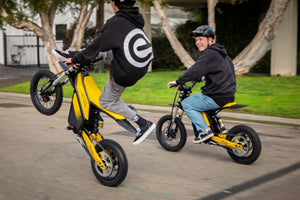
How far an electric dirt bike can go on a single charge depends on the model, battery capacity, riding speed, terrain, rider weight, and riding style. There is no single standard range for all electric dirt bikes.
Manufacturers often publish a maximum or estimated range under specific riding conditions. Real-world range can be lower when riding at higher speeds, climbing hills, riding through soft terrain, or frequently accelerating and braking.
Understanding what determines range can help you compare electric dirt bikes more accurately and decide how much battery capacity you actually need.
How Many Miles Can an Electric Dirt Bike Go?
Electric dirt bike range varies considerably between models. A bike with a larger battery and lower energy consumption can potentially travel farther on one charge than a smaller-battery model, but battery size alone does not determine actual mileage.
When comparing range specifications, look at three things:
|
Specification |
What It Tells You |
|
Battery voltage (V) |
The electrical system's voltage |
|
Battery capacity (Ah) |
How much electrical charge the battery can store |
|
Battery energy (Wh) |
The approximate amount of stored energy |
Watt-hours are particularly useful when comparing batteries with different voltage and amp-hour ratings.
For example, a 52V 26Ah battery has a nominal energy capacity of:
52V × 26Ah = 1,352Wh
That does not mean the vehicle will use exactly the same amount of energy for every mile. It simply provides a useful way to understand the amount of energy available before other factors are considered.
This is why two electric dirt bikes with different battery specifications should not be compared based only on amp-hours.
What Determines Electric Dirt Bike Range?
Several factors influence how much distance an electric dirt bike can cover on a charge.
1. Battery Capacity
Battery capacity is one of the most important factors.
A battery with more stored energy gives the motor more energy to draw from, creating greater range potential. However, a larger battery does not automatically translate into a proportional increase in miles.
A higher-capacity battery can also add weight, while a more powerful electric dirt bike may consume energy more quickly.
For range comparisons, watt-hours are generally more informative than amp-hours alone.
2. Riding Speed
Speed has a major effect on energy consumption.
Riding at a moderate pace generally requires less energy than continuously riding near an electric dirt bike's maximum speed. Air resistance also increases as speed increases, while maintaining speed over rough terrain requires additional motor output.
This means an electric dirt bike that can travel a certain distance during moderate recreational riding may cover substantially less distance when ridden aggressively.
For more information about the relationship between speed and electric dirt bike performance, see our guide to [how fast electric dirt bikes go].
3. Terrain
The surface you ride on can make a significant difference.
A relatively flat, hard-packed trail typically requires less energy than steep or technically challenging terrain. Riding through sand, mud, loose dirt, or repeated climbs can require more motor power.
Terrain can affect range in several ways:
-
Flat hard-packed surfaces: generally easier to maintain speed
-
Hilly terrain: requires additional energy for climbing
-
Sand: increases rolling resistance
-
Mud: can require more motor output and traction
-
Technical trails: frequent acceleration, braking, and changes in speed can increase energy consumption
This is one reason manufacturer range figures should be treated as reference points rather than guarantees.
4. Rider Weight
The total load carried by the electric dirt bike also affects energy consumption.
A heavier rider and additional gear require more energy to accelerate and climb. The effect can be more noticeable on steep terrain or during repeated acceleration.
There is no simple formula that can tell you exactly how many miles a particular rider will lose based on weight alone, because terrain, speed, tires, and riding style also change energy consumption.
5. Riding Style
How you use the throttle can be just as important as the specifications of the bike.
Frequent hard acceleration, high-speed riding, steep climbs, and aggressive off-road riding can consume energy much faster than steady recreational riding.
For two riders using the same electric dirt bike, actual range can therefore be very different.
Does a Bigger Battery Always Mean More Range?
A bigger battery generally provides more stored energy, so it increases the potential for longer range.
But more battery capacity does not guarantee proportionally more miles.
Consider two electric dirt bikes with different battery sizes. If one has a larger battery but also uses significantly more power because of its motor output, weight, tires, or riding conditions, the difference in real-world range may be smaller than the battery specifications suggest.
A useful comparison is therefore:
Battery energy + vehicle efficiency + riding conditions
rather than battery capacity alone.
How Does Speed Affect Electric Dirt Bike Range?
Higher sustained speeds generally reduce range because the motor has to provide more power and aerodynamic resistance increases with speed.
Acceleration also matters. Rapidly accelerating from a stop requires more energy than gradually reaching the same cruising speed.
This creates an important distinction between top speed and range.
An electric dirt bike may have a high claimed top speed while still offering useful range during moderate trail riding. Conversely, repeatedly riding near its maximum speed can reduce the distance available from the same battery.
If speed is your main consideration, look at the motor, battery, controller, gearing, and vehicle design together rather than assuming that a larger motor automatically means greater range.
How Does Terrain Affect Range?
Electric dirt bikes are designed for off-road riding, but not every type of off-road terrain places the same demand on the motor.
A long, relatively smooth trail can require much less energy than a route with repeated steep climbs, deep sand, mud, and technical obstacles.
For example, climbing a hill requires the motor to work against gravity. Riding through loose sand can also increase rolling resistance, requiring additional power to maintain momentum.
If you regularly ride in challenging terrain, it is worth choosing a bike with enough battery capacity for the type of riding you actually do rather than relying solely on a manufacturer's maximum-range number.
Claimed Range vs. Real-World Range
One of the most important things to understand when comparing electric dirt bikes is the difference between claimed range and real-world range.
A manufacturer may list a maximum or estimated range based on particular testing or riding conditions. Those conditions may not match the way every rider uses the bike.
Actual range can vary based on:
-
Riding speed
-
Rider weight
-
Terrain
-
Elevation changes
-
Acceleration and braking
-
Tire pressure
-
Temperature
-
Battery condition
-
Riding mode
-
Payload
-
Wind and surface conditions
Therefore, a published maximum range should be viewed as a reference point rather than a guaranteed distance.
When comparing two electric dirt bikes, it is more useful to ask under what conditions was the range measured? than to look only at the largest mileage number.
How Far Can the Heybike V1 Go?
The Heybike V1 is a useful example of how battery specifications and published range fit together.
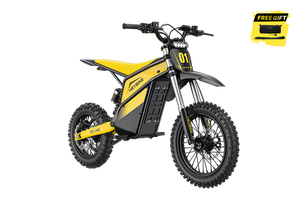
Heybike Sports lists the V1 with a 52V 26Ah battery, equivalent to 1,352Wh of nominal battery energy, and a maximum range of up to 50 miles.
The V1 also uses a 4160W peak mid-drive motor and is designed around off-road riding, with 14-inch front and 12-inch rear tires and hydraulic suspension.
The important point is that the 50-mile figure is a maximum range specification, not a promise that every rider will travel 50 miles in every riding situation.
A rider traveling at higher speeds on hills or technical terrain can use considerably more energy than someone riding at a moderate pace on relatively easy terrain.
That distinction is important when using published product specifications to plan a real ride.
How Can You Get More Range From an Electric Dirt Bike?
You cannot completely eliminate the energy demands of off-road riding, but several habits can help you use the available battery more efficiently.
Ride at a Moderate, Consistent Speed
Constant high-speed riding uses more energy. A more moderate pace can help extend the distance available from the same battery.
Avoid Unnecessary Hard Acceleration
Aggressive launches require significant electrical power. Smooth throttle inputs can help reduce unnecessary energy consumption.
Check Tire Pressure
Incorrect tire pressure can affect rolling resistance and handling. Follow the manufacturer's recommended tire pressure for your specific model and riding conditions.
Reduce Unnecessary Weight
Extra equipment adds to the total load the motor needs to move, particularly when climbing.
Plan Around Terrain
If you know a route contains long climbs, deep sand, or technical sections, allow additional battery capacity rather than planning around the manufacturer's maximum range.
Maintain the Drivetrain
A properly maintained chain, drivetrain, brakes, and tires can help the bike operate as intended.
What Happens When an Electric Dirt Bike Runs Out of Battery?
When the battery is depleted, the motor can no longer provide electric power.
Unlike a conventional bicycle, many electric dirt bikes are relatively heavy and are designed primarily around motor-powered riding. That means pushing or manually moving one for a long distance may be difficult.
For longer or remote rides, it is therefore sensible to plan a route with enough range reserve rather than treating the published maximum range as the exact point at which you should turn around.
A simple approach is to plan the ride around the distance you actually need and leave additional battery capacity for terrain changes, unexpected detours, and riding conditions.
How Much Range Do You Actually Need?
The right amount of range depends on how you ride.
|
Riding Scenario |
What to Consider |
|
Short recreational rides |
Battery capacity for a typical session may be sufficient |
|
Local trail riding |
Consider terrain, elevation, and return distance |
|
Longer trail sessions |
Look for higher battery capacity and plan a reserve |
|
Remote off-road riding |
Range planning becomes especially important |
|
High-speed riding |
Expect greater energy consumption than moderate riding |
For example, someone who normally rides for an hour on local trails may have very different requirements from someone planning several hours of off-road riding far from a charging point.
Instead of asking only, “How many miles does this electric dirt bike get?”, ask:
“How many miles do I need to cover under the conditions where I actually ride?”
That produces a much more useful comparison.
Range and Battery Life Are Not the Same Thing
“Range” and “battery life” describe two different things.
Range refers to how far an electric dirt bike can travel on a charge.
Battery life refers to how the battery performs over its usable service life and through repeated charging cycles.
A bike with a large battery may offer substantial range per charge, but that does not tell you how long the battery will maintain its original performance over time.
When evaluating an electric dirt bike, consider both the distance you need from one charge and the manufacturer's battery specifications, charging information, warranty, and maintenance guidance.
FAQ
How far can an electric dirt bike go on one charge?
There is no single standard range. Actual distance depends on the model, battery capacity, riding speed, terrain, rider weight, riding style, and other conditions.
What is the average range of an electric dirt bike?
There is no reliable single average that applies to all electric dirt bikes. Models vary substantially in battery capacity, power output, vehicle weight, and intended use, so published range figures should be compared on a model-by-model basis.
Does riding faster reduce electric dirt bike range?
Generally, yes. Sustained higher-speed riding requires more energy, and frequent hard acceleration can also increase energy consumption.
Does rider weight affect electric dirt bike range?
Yes. A greater total load generally requires more energy, especially during acceleration and uphill riding. The exact effect depends on terrain, speed, and other conditions.
Is the manufacturer's maximum range the range I will actually get?
Not necessarily. Maximum or estimated range is based on particular conditions and may differ from real-world riding. Speed, terrain, rider weight, temperature, and riding style can all affect actual range.
How long does an electric dirt bike battery last?
Battery lifespan depends on the battery chemistry, charging habits, temperature, usage, storage conditions, and other factors. Range per charge and long-term battery lifespan should be considered separately.
Final Thoughts
Electric dirt bike range is not determined by one specification.
Battery capacity provides the available energy, but speed, terrain, rider weight, riding style, and vehicle design determine how quickly that energy is consumed. That is why a published maximum range should be treated as a reference rather than a guaranteed distance.
When choosing an electric dirt bike, start with your actual riding plans. Consider how far you normally ride, how difficult the terrain is, how fast you expect to travel, and how much battery reserve you want at the end of the ride.
The goal is not simply to find the largest range number. It is to find a battery and vehicle setup that provides enough usable range for the way you actually ride.
Share:
Electric Dirt Bike vs. E-Bike: What's the Difference?