 United States
 Canada
 Europe

 Canada
 Europe



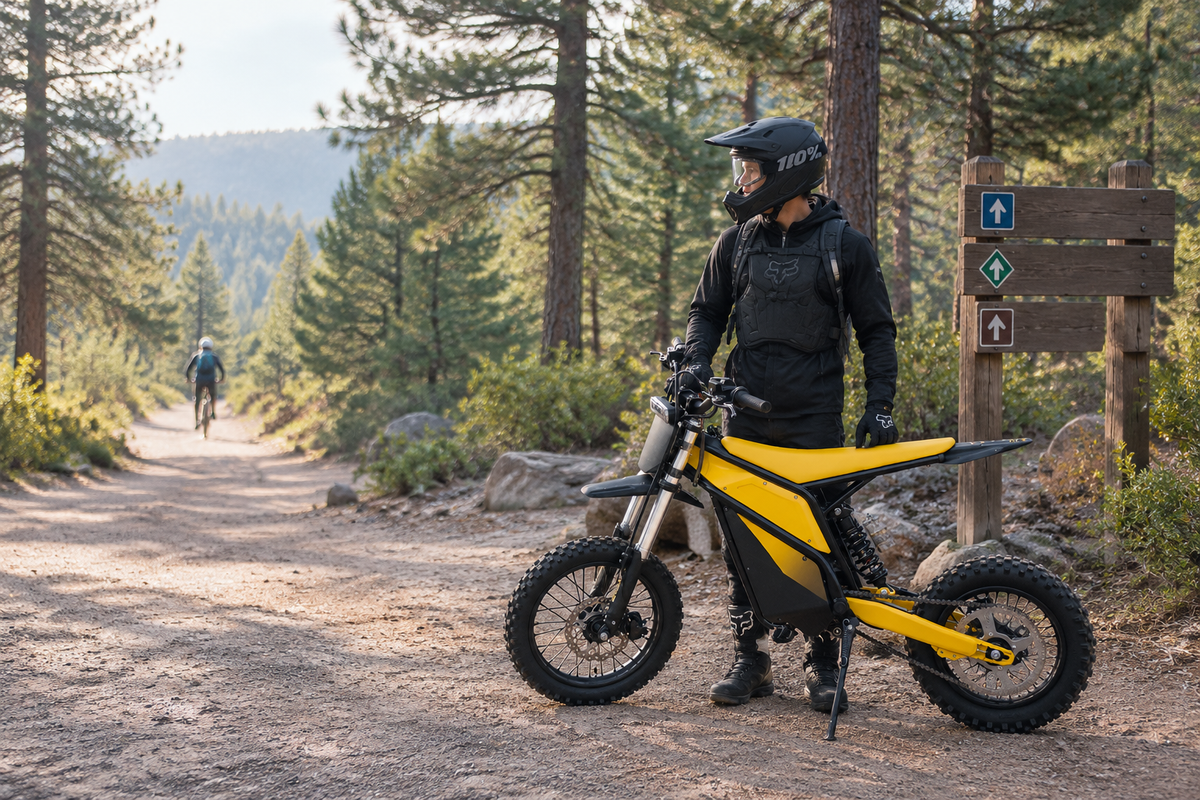
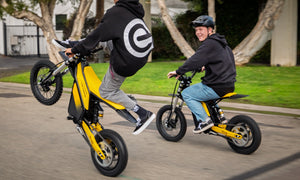
Good electric dirt bike trail etiquette begins with permission to ride and continues with predictable decisions around other people. Check that your exact type of vehicle is allowed, leave room to stop within what you can see, and arrange passes with the other trail user. Electric power does not make a dirt bike eligible for every bicycle trail, and a quiet approach does not guarantee that someone has heard you.
Quick take: Confirm access before unloading. Slow early when visibility narrows. Communicate before passing. Wait for a suitable place rather than asking someone to step off the trail into fragile ground.
Check the route, not just the destination
A recreation area can contain several different access categories: roads, designated motorized trails, bicycle trails, and closed areas. A map pin for the park does not tell you which category applies to the route you intend to ride. Look for the land manager's current route map, vehicle restrictions, seasonal notices, and any permit or registration requirements. Save the relevant information before leaving cell service.
The Bureau of Land Management's OHV guidance tells riders to obey posted signs and applicable state restrictions. Treat an electric dirt bike as its documented vehicle type when asking about access; do not describe it simply as an e-bike if that leaves out its controls or capabilities. Our electric dirt bike laws guide provides background, but the authority responsible for the actual route makes the local access decision.
Before departure, identify an alternative destination. If a gate is closed, a trail is waterlogged, or a current notice conflicts with an older map, having another plan makes it easier to stop without improvising an unauthorized detour.
Set a pace that leaves room for an encounter
Choose your approach speed around the distance you can see and the space available to stop. A blind bend, dusty section, crest, or narrow bridge can hide someone who is moving much more slowly than you. Ease off before the obstruction rather than waiting until another person appears.
Leave enough space behind the rider ahead to see the surface and respond independently. There is no single gap that works for every speed, slope, surface, or visibility condition. If dust hides the lead rider or you are copying their braking without seeing the reason, the gap is too small for that situation. Let the dust settle or regroup at a suitable stopping place.
Group leaders should explain the next regroup point before moving. Riders who miss a turn should not feel pressured to race to catch up. Stop where others can see you, keep junctions clear, and count the group before continuing.
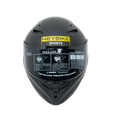
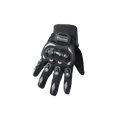
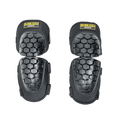
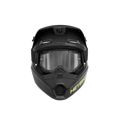
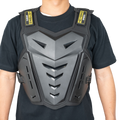
Choose properly fitted equipment before departure using the electric dirt bike gear guide. Make equipment adjustments at a suitable stopping place rather than while the group is moving or waiting in a narrow section.
Make passing a conversation
A pass works when both people understand the plan. Approach slowly enough to wait, give a calm audible greeting from a useful distance, and ask before moving through. Do not rely on a sudden horn blast or assume that the other rider's glance means they have agreed to a pass.
- Make contact. Let the person know you are behind them without crowding their rear wheel.
- Wait for acknowledgment. They may need time to find stable footing or a wider section.
- Agree on the place. Use a clear section with room for both parties; do not pass into a blind turn.
- Move through gently. Leave clearance, avoid throwing loose material, and wait until you are clear before increasing pace.
- Thank them. If riding in a group, communicate how many riders remain when you know the count.
If someone wants to pass you, hold a predictable line while you identify a suitable place to let them through. A hurried move onto a soft edge can create more difficulty than a short wait.
Adjust your response to the encounter
| Encounter | Useful response | What to avoid |
|---|---|---|
| A walker ahead | Slow early, greet them, and wait for an agreed passing place. | Assuming silence means they know you are there. |
| Horses or pack animals | Stop well back, speak calmly, and ask the handler how to proceed. | Accelerating past or deciding where the animal should move. |
| An oncoming rider in a narrow section | Stop in a visible, stable position and coordinate who can move to a suitable space. | Forcing a universal right-of-way rule onto a local situation. |
| A stopped group at a junction | Approach slowly and leave room for others to use the junction. | Blocking the route while discussing directions. |
| A maintenance crew or emergency response | Follow directions and wait outside their working space. | Riding around a closure or moving equipment yourself. |
Posted rules and the land manager's instructions take priority. Where a particular yield convention applies, learn it before the ride. Even when you have priority, give another user time to react; priority is not a reason to continue into a developing conflict.
Protect the route while making room
Passing space should come from a suitable existing opening, not a new line through vegetation. Stay on the authorized route and avoid widening a muddy section by riding around its edges. If conditions make the designated route unsuitable, turn back instead of creating another track.
Keep stops away from water access, gates, and places where livestock or wildlife are already constrained. Pack out what you bring, including damaged equipment and food packaging. An electric drivetrain removes engine exhaust at the bike, but it does not remove tire disturbance, litter, or the effect of repeated traffic.
Handle a disagreement without escalating it
If someone questions your access, stop in an appropriate place and discuss the route information calmly. Show the relevant map or permit if useful. When the answer remains unclear, return to a known permitted area and contact the land manager. An argument beside the trail cannot establish a new access right.
After the ride, note any confusing junction or damaged sign and report it through the manager's normal channel. For your next outing, the beginner's electric dirt bike guide can help you connect route choice with the bike's intended use. The goal is straightforward: everyone should be able to predict your next move and continue their day with enough space.
Share:
How to Choose an Electric Dirt Bike for Adults
Electric Dirt Bike First-Ride Checklist: Bike, Gear, and Site Checks